Zachary Corsa
Cutlass and Grapevine
Zachary Corsa
Cutlass and Grapevine
What had she learned? She had learned that white phosphorus could be beautiful. All those delicate pale tendrils sweeping the land with flame, brushing gracefully against lives they rendered ash. Along cratered freeways, beneath incinerated palms, in the corridors of government complexes and diplomats’ retreats: the never-ending blood and bone. Dread crept into the conversational pause, the nervous glance toward exploding horizons. The tanks slipped silently through the districts or plunged roaring down embankments, singular mechanical whine, blithely leveling all that fell before them. Distorted voices bellowed propaganda from their hollows. The precision drone strikes, the relentless sniper fire, the helicopters silhouetted against smoke-hazed skies—every inch of it sealed off and self-referential, real in its unreality, a handsomely-staged melodrama of nightmares. It had been three weeks since the American Embassy had been flattened, twenty-seven civilians confirmed dead.
The vague sense of fracture worked its way into the earth, into objects. Every skeletal tower seemed to claw heavenward, each shadow more permanent than the ones back home. Teenaged revolutionaries with surplus Kalashnikovs prowled block after ghostly block, in battered pickups or astride dirt bikes, faces concealed with shrouds. A cellar or courtyard where someone had been tortured held an aura of significance, some grand collapse implied in the energy spent to deconstruct human will.
By now even the frostiest of the embedded remained largely indoors, drunk on balconies, stretched cackling over bars, passed out morosely in the unreliable elevators. In the very early morning, you could hear them weeping behind the double-locked doors of their suites, beneath whatever shower or faucet they’d left running to camouflage their agony. To choose to bear witness to suffering was to never again see the world as whole. Something cold and ominous had been glimpsed, fleeting impressions in a darkened room, and then you knew. You knew exactly what people were capable of, and why, and you were helpless to do anything but repeat its few exhausted truths so that everyone might take part. Journalism was a failed dialogue of forgotten language, an attempt to communicate what was impossible.
Conrad herself was neither much of a drinker nor a true embedded, not even on a freelance basis. This was a month in the field to gather observations and interviews for her next collection of essays. In this way, she stood a bit apart from the close-knit scrum of documentarians and correspondents, half-mad professionals who considered her work a betrayal of the facts themselves, indulgent and pretentious whim, impure and thus irrelevant. Even lunatics who reported on war and terror had their caste system, a catechism of virtues and transgressions, death junkies with a slang she couldn’t decipher.
In truth Conrad didn’t really mind the isolation, as isolation had long been her most-treasured ally, far outpacing any genuine talent she possessed. No one she’d ever known could melt as anonymously into a crowd, nor will themselves into invisibility so that others might speak more freely, even recklessly. She took great pains to be unassuming in manner and dress, and as a result had encountered very little trouble on her ‘assignments.’ Perhaps some envy as well, then, from the embedded folks she’d crossed paths with, a bewildered resentment at all the delicious secrets she’d gleaned simply by staying silent, easy to overlook, a murmuring hoodie and pair of jeans that held the suggestion of a person but not the verve.
#
American cargo flights departed the ad hoc airstrips at extremely steep rates of ascent, an attempt to stifle potential missile strikes. Conrad watched hulking planes pressed against clouds in the distance, climbing and climbing as if escaping existence altogether, leveling out gradually and gone. That something so unwieldy, carrying such unwieldy freight, could slip its terrestrial bonds astonished her, a miracle of engineering in bloodshed and capital, the strange spectral way that war becomes enchanting the longer you look at it.
One late evening, blue twilight settled over the city like a veil. She stood mutely on a hotel balcony behind two of the embedded as they passed a flask between them, all of them watching the languid ritual of vertical climb, plane after plane, until one sank from its celestial drift and plummeted with terrifying speed into the face of an apartment tower. The plane sheared a wound of glowing flame through the upper stories, shrieking and erupting, far-off screams of panic reaching them just before the shockwave buffeted their clothes. The men stood clumsily, not noticing her, staring at each other with alarm.
“Load must’ve broke free,” one of them sighed. “Shifted to the back of the hold. That’s the only thing that could do it. Good Christ.”
“Do we shoot it?” The other inquired, slurring. “Or are we too drunk?”
“We’re too drunk,” the first man decided, falling gape-mouthed back into a patio chair. He shook his head and glanced at Conrad. “And what are you gonna do for the poor bastards, Conrad? Sit ‘em down for a little chat?”
“Knock it off, Brandt,” the other embedded said. “Don’t be an asshole.”
Brandt dismissed her, and she was invisible once more. “I think this calls for another nightcap,” he crooned to his friend, producing the flask again.
Conrad stared into the spiraling smoke, transfixed, a plume so black it seemed a hole torn in the fabric of the world. She recalled interviews with crash survivors, the trembling and stunned, those who’d watched hillsides looming ever larger through tiny windows, helpless to hold off the inevitable. More than a few of them had wondered if they’d really died, after all.
#
Back home there was the wall in her study, the one weary fragment of self she never shared with the occasional visitor or client. This was, she’d come to believe, the truest element, something deeper than the essays, the plain words arrayed on pages or in lines of code. These were her own amateur snapshots and gathered impressions, collaged haphazardly where only their assembler could see them, study them, consider them. Crumpled newsprint, colors fading or running, ink smearing, little dots revealing slight details. In the hinterlands of humanity our nature is revealed, she’d once written, and was still unsure what she’d meant.
Few living things dwelled within her shrine of horrors, and those that did were in distress: ageless women wailing over still figures at the edges of dusty thoroughfares, herds of sheep blindly fleeing automatic fire in trampled vineyards, the barely alive lingering at the threshold of death with blood pooling across cracked tile. Instead, most of the images were landscapes of a kind, drained of all humanity but the human impression. Here, the abandoned brick building in deep woods with windows boarded over. There, the fluorescent-washed cartel basement. Now, lonely streets of corroded cars beneath maples bereft of leaves. Then, a row of desolate old frame houses. In the upper-left region, you’d find fields bordered by barbed wire and coated in snow, a gore-stained kitchen in the flat crime-scene lighting of a Polaroid. At the tableaux’s center were murky rooms and offices, blurred metal stairs leading to wells of utter blackness, spent casings scattered across wet carpet, wreckage and debris, singe and soot. Everything was hushed and solemn, a tentative whisper at the limits of creased frames, the undisturbed calm of disfigured lives hovering at neutral.
Lost souls, Conrad would think. Ghosts of remembrance drifting.
#
In other hides in other rooms, she’d secreted caches of videocassettes and film reels—scratches and burns, the tracking errors swarming across the faces of obscured subjects. These were lonesome jeremiads smuggled out of re-education camps and weapons labs, testaments to experience and slaughter, time-stamped and indexed and filed neatly away. Generation loss and ruin, no symbolic display required.
Many of Conrad’s oldest interview reels were dying now, flaking their magnetic essence, the voices trapped within slurring and dropping out, warbling and dragging. The rambling mosaic on her study wall remained fixed and present while the clandestine and the obsolete vanished into ether, a moment elapsed and then left to erode through the bleakly everyday, the safely media-cordoned.
Conrad didn’t love the images. They weren’t cathartic or accidentally moving or somehow beatifically pure. They stood for nothing but their own ugliness, torn loose from the hell that crowded her professional life. If pushed, she’d offer that she didn’t believe in shying away from difficult truths about the world; unspoken would be the addendum that she’d felt this way since age twelve and was still working out exactly why.
The eerie and uncanny moved further out as one approached them. To hold them close would be to drown in their senseless depths.
#
Late at night the wastelands were luminous, a high-wattage permaglow from regiments of street lamps, light pollution like an unmoored bruise. Here the ancient realm of borders and flags fell away, cocooned in darkness that was impenetrable, wall-like, small animals darting through the underbrush. Past the last exit, the freshly-paved travel lanes and informative neon road signs dead-stopped, given over to rutted tracks and sullen marshland, the shuddering mortars and drones faint and dream-like. Carpets of shimmering stars ebbed between tangles of purple-black clouds racing east, away from the city’s cardboard slums and cul-de-sac palaces. So many bright and hungry eyes lurking in the void. No gates, no checkpoints, no bridges, no canals. No-place. The outskirts appeared to have purposefully thrust themselves away from the capital’s charnel heat, the spellbound commands of its desperate religious mania. Somewhere far north a pulsing sea shattered repeatedly against a spit of rocky coastline, in salt spray and piscine rot, tidal gales shivering through fronds, flare stacks sparking electrically across the channels. Interested parties were driven to obliterate as much of this patchy wilderness as could be managed. For every goatherd, a landmine.
#
When Conrad had first arrived a month past, one of the more approachable embedded commandeered a rusted brown pickup and brought her to this place, this X scrawled across the map. It took her awhile to understand. She craned her neck to find the city’s modest skyline etched in abrupt lightning-flash behind them, then turned to face the unlit expanse of night ahead. It seemed a trail into oblivion. They were parked beneath the very last streetlight, flickering in salt mist high above them. The edge of everything, then. Or the edge of nothing.
“So why are we here?” she’d asked her guide, whose eyes were clenched shut, a frightened child confronting a horror half-understood. She saw flecks of sand in the man’s hair, the way he was graying at his temples, the rough creased skin.
He answered without opening his eyes. “You have to get outside of it to understand. From here on it’s just darkness. What’s behind us doesn’t exist.”
An undefinable moment swayed into the past, then another.
“I’m not superstitious,” she told him. “Places are just places.”
The embedded, whose name was Chuck or maybe Chip, stared now through the murky windshield, dog-tired but preoccupied with something significant, something he hoped to articulate there and then. “That’s where you’re wrong, Conrad. Places carry memories just like people do. It’s a double exposure. With everywhere you’ve been, all you’ve seen, how could you not know that?”
Conrad couldn’t answer. Before long Chip or Chuck gunned the Toyota’s waspy engine and they cut back through the night towards the burning city, not speaking. A few days later, she heard he’d been taken hostage by extremists in the foothills to the west of the city’s port. The video and its attendant grotesqueries was not long in being posted.
#
On the second to last scheduled day of Conrad’s expedition, the city’s disintegrating governmental body began drawing up plans for a mass evacuation, a development the embedded viewed as comically optimistic. With their decree thus issued, the various attachés, representatives, and ambassadors beelined for the badly-shelled airport, private jets waiting to whisk them off to friendly coastal exile. Any of the ‘collaborators’ who had aided the foreign parties as guides, as translators, as drivers, were left to face the breach on their own.
Meanwhile the streets swarmed with families dragging sparse belongings along the cobblestones, the children wailing, starved dogs snarling in panic and confusion. On rooftops the teenaged revolutionaries crouched and smoked, pointing and jeering, nudging ribs as their hands twitched at their triggers, outwardly triumphant but uneasy. More flames engulfed the sallow slums than on other days, and a few minutes past noon Conrad heard the stuttering convulsion of some massive structure being leveled not far away. Lying in a fetal curl on her hotel mattress, she winced and covered her ears. Soon they’d sever the grid, dynamite a dam, some gesture to seal the occasion—all the motorbikes and ex-military Jeeps endlessly spinning at the center of town, rounds chipping away at the statue of the Martyr of Independence, young men cheering and embracing. They recorded themselves on black market camcorders, proudly grinning. They took to sluggish broadband connections in bombed-out cafés to type all-caps slogans of rejoice and promise for the future, corpses of local students sprawled nearby.
By dusk the mood of exultation had cocooned the city, and all that might still flee were being encouraged to do so, by editors and spouses, by parents and friends, concerned faces splintering into misshapen pixels on laptop screens, their voices as indistinct as spirits. The revolutionary flag—maroon field with a cutlass and grapevine motif in goldenrod—was hoisted to jubilant applause above the blasted Government Center, the last of the embedded watching from their terraces. They passed around joints and beers, a lurid air of last days spectacle and resignation pervading, every bartender and bellhop fled or hiding now. They raided the bars with glee, noisily fucked behind concierge stations and alongside toxin-clouded pools, and loudly insisted they’d seen worse, or maybe their parents had. Fucking Saigon in ’75, my dude, that was apocalyptic.
A handful of the most devout remained cloistered in their suites, obsessively editing and re-editing their pieces to get them in under the wire for tomorrow’s editions, kicking over desktop units in a rage when a tenuous signal was lost, adrenaline-shaky and exhausted. After awhile, the roving party brigade would drag them out into the deserted halls to join the festivities, and they’d give in almost gratefully, disgusted and teary-eyed, feeling older. The NVA and the Cong, brother, haunting Saigon’s suburbs now, rocket fire landing near the gates of the Embassy, whole families dangling from the Hueys. This ain’t shit, man. This is nothing.
#
Conrad watched the frat house capering at her usual remove, standing just off to the side, obsidian eyes snatching at every indiscretion, magpie-like. Take note of every word, she scolded herself, every color, every nuance of emotion, every bitter rant or devastated moan. This is a land and a time that’s passing into history, to forever be revised and redacted, to be well-managed, the sharp edges rounded soft and preferred chains of events slotted into place so neatly that no one would ever realize they were lying.
Only a month here. She’d surveyed the mangled aftermaths, a dozen horrific ways to slip from the surface of the living, but this spooked camaraderie, these illicit satyrs carousing at the foot of hell, seemed its own strata of violence, an outgrowth of the compulsion to bear witness and never look away. So little yet understood. Some things would forever resist the media’s urge to make them palatable. Some things would burn forever.
#
The good times skidded to a halt when two crisp UN officials, just kids really, burst onto the terraces and into the empty ballrooms and ordered them to gather their effects and immediately join the convoy dispatched to the airport. A few of the embedded lobbed bottles, but lazily, just for the sake of doing it, everyone sensing that the moment of revelry had passed. They stoically snatched possessions from unmade beds and flooded baths and trudged down to the waiting transport, a massive olive-drab truck with a wide bed and stake sides. Jostling and shoving, the last of the city’s pallbearers settled into the bed, a few hanging deliriously off the tailgate as they sped away from the curb.
It was only a half mile to the airport but the going was rough, the truck struggling to dodge depressions in the earth, swerving to avoid burning cars or suspicious bands of rebels. They passed the base of the apartment tower the plane had recently struck, black cavities and fissures revealing dangling wires, loose insulation sagging from drop ceilings, water dripping somewhere deep within. The truck shoved rudely through a rebel-manned blockade without slowing, a few passengers cringing at the impact. Drunk on their own celebration, the revolutionaries reacted slowly, half-hearted in their pursuit.
It seemed hours before they reached the airport grounds, jet-fuel heat shimmering in a ghostly haze from the tarmac, blood staining the off-ramp signs. The embedded were hustled from the bed of the truck and gathered in a loose queue, instructed through megaphone to run without pause towards the row of UN helicopters crouched in the dust beyond the runway. Distantly, Conrad saw in the crews’ pale faces how terrified they were, attempting to look all directions at once, a few of them levering sidearms out of cockpits as if performing pagan rituals of protection. Occupying forces always hurried frantically in the end, chased from the places they’d altered as if cursed, as hungry to be shut of them as they were to invade them and set down roots.
Don’t look back, the UN officials shouted, and they all bolted clumsily towards the cargo ramps lowering slowly into the mud and debris.
As if scripted, the firing began. Conrad heard a few groans as bodies tumbled into dust, felt blood splash sickeningly against her jeans. She didn’t pause or turn around, even when she felt something heavy tumble from her knapsack and crunch against the earth. She gained the closest cargo ramp just as it began to lift, alarm furiously keening, and somehow scissored herself inside to roll free of the door, panting with exhaustion. Tangled in heat and hurrying breaths, the deafening chug of the rotors, the seasick lurch of liftoff—so much tumult and struggle to sail free. Someone was screaming or laughing wildly, she didn’t care which. She suspected it was her favorite camera that had met its end as they crossed the runway, a Pentax she’d cherished since college. Conrad had surrendered so much of what she’d cared for over these mad years, but it still hurt. Just another sacrifice to a place without sense, that was frantic to eat itself alive.
One of the UN officials raised her brusquely to her feet, fingers hooked into her armpits, shaking her so she wouldn’t pass out. When they were was satisfied that Conrad was conscious and alert, they moved along. She half collapsed against the cracked chill of a porthole window. The helicopter yawed once dramatically, then confidently steadied.
#
Conrad watched the scene below through heavy eyelids as the chopper gained altitude, the crew really pushing to outpace the rockets trained on their coordinates. The bewitching blue gloaming of the city at that time of year was the same, settling in pools along the mountain passes and farmer’s paths, in the cement yards of wire-windowed compounds, in the gleaming shop districts beyond the canal now reduced to pillaged shards. What had changed was the city’s throbbing heart, the former village squares that sprawled into a labyrinth of vendor’s markets and tea shops, grandmothers hanging out washing with the pearl-grey morning, children nudging soccer balls down winding, paint-peeled alleys. All of it was a formless purgatory now, an absence of place, as glass-eyed and dead as those on the lists of names the rebels wheat-pasted to shopfronts and fountains, the names of those they would condemn to eternity. Flaring and robust, the conflagration would cast its magic in reverse, the city losing definition as roofs caved in and rebels danced and sang. Every feature would blur and the palms would char until all would be as it had been in long-forgotten ancient days, a partition of land without importance at the mouth of a boggy river, no golden vestiges of wealth or preeminence left upright. The great city had become memory itself, a memory devouring the wicked and the just as one, a past that stood outside of time, trawling time’s margins. The past that never stopped happening.
In this manner, Conrad’s essay of the whole affair was as good as already written. She would begin her piece just like that. The city had become memory itself…
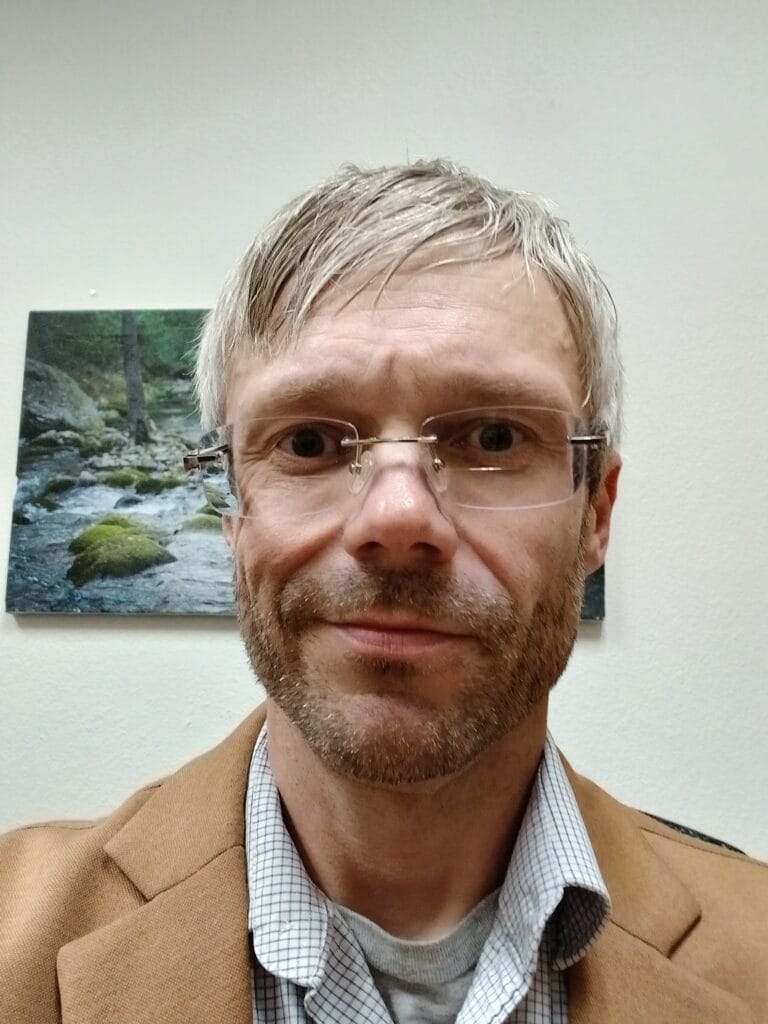
Zachary Corsa is a writer, musician, music journalist, and multimedia artist. He lives in Memphis, Tennessee.

Featured in:
Red Rock Review
Issue 55